Testing & Maintenance

Switchgear & Circuit Breaker Testing

Acceptance and maintenance testing of low- and medium-voltage switchgear and circuit breakers. Insulation, contact resistance, timing, and trip verification performed to ANSI/NETA specifications.

Scope

LV & MV switchgear and breakers

Deliverable

Documented as-found and as-left results

Standards

ANSI/NETA ATS · MTS · NFPA 70B

Switchgear & Circuit Breaker Testing – NewEra Testing

Service Overview

Proven to operate when the protection calls for it.

Switchgear and circuit breakers are the final link between a protection scheme and a cleared fault. NewEra Testing field teams perform acceptance and maintenance testing on low- and medium-voltage breakers, switchgear lineups, and their control circuits. We verify insulation integrity, contact condition, mechanism timing, and trip-circuit operation, then document every result against ANSI/NETA criteria and manufacturer data.

Equipment covered

Metal-clad medium-voltage switchgear

Metal-enclosed switchgear and switchboards

Vacuum circuit breakers

SF6 gas circuit breakers

Oil circuit breakers

Low-voltage power circuit breakers

Insulated- and molded-case breakers

Electronic and solid-state trip units

Medium-voltage motor starters and contactors

Testing & Capabilities

Field tests that prove operation, not just condition

Each test targets a specific failure mode: insulation breakdown, contact degradation, mechanism wear, or a trip path that fails on demand.

01

Insulation Resistance

Breaker poles, switchgear bus, and open contacts tested phase-to-phase and phase-to-ground, evaluated against ANSI/NETA minimums and prior results.

01

Insulation Resistance

Breaker poles, switchgear bus, and open contacts tested phase-to-phase and phase-to-ground, evaluated against ANSI/NETA minimums and prior results.

02

Contact Resistance (Micro-Ohm)

Micro-ohm measurement of each pole’s main contacts and switchgear bus joints to expose pitting, misalignment, or loose bolted connections.

02

Contact Resistance (Micro-Ohm)

Micro-ohm measurement of each pole’s main contacts and switchgear bus joints to expose pitting, misalignment, or loose bolted connections.

03

Timing & Travel Analysis

Open, close, and trip-free timing with contact travel, velocity, and pole synchronization, compared to manufacturer specifications.

03

Timing & Travel Analysis

Open, close, and trip-free timing with contact travel, velocity, and pole synchronization, compared to manufacturer specifications.

04

Vacuum Integrity & Overpotential

Vacuum bottle integrity and AC or DC overpotential testing on medium-voltage breakers, applied at levels set by ANSI/NETA and the manufacturer.

04

Vacuum Integrity & Overpotential

Vacuum bottle integrity and AC or DC overpotential testing on medium-voltage breakers, applied at levels set by ANSI/NETA and the manufacturer.

05

Trip Unit Primary Injection

Long-time, short-time, instantaneous, and ground-fault pickup and timing verified by primary current injection against the applied settings.

05

Trip Unit Primary Injection

Long-time, short-time, instantaneous, and ground-fault pickup and timing verified by primary current injection against the applied settings.

06

Control & Trip Circuit Checks

Trip and close coil operation, charging motor, interlocks, auxiliary contacts, and functional trip checks from the protective relay to the breaker.

06

Control & Trip Circuit Checks

Trip and close coil operation, charging motor, interlocks, auxiliary contacts, and functional trip checks from the protective relay to the breaker.

Applicable Standards

Performed to recognized industry standards.

ANSI/NETA ATS

Acceptance Testing Specifications for Electrical Power Equipment and Systems

ANSI/NETA MTS

Maintenance Testing Specifications for Electrical Power Equipment and Systems

IEEE C37.20.2

Standard for Metal-Clad Switchgear

NFPA 70B

Standard for Electrical Equipment Maintenance

From the Field

Methodology

How every job runs.

01

Scope & Review

We review drawings, one-lines, and the settings issued by the engineer of record or client before mobilizing.

01

Scope & Review

We review drawings, one-lines, and the settings issued by the engineer of record or client before mobilizing.

02

Safe Mobilization

Job briefing, hazard awareness, arc flash precautions, and proper PPE are in place before any test begins.

02

Safe Mobilization

Job briefing, hazard awareness, arc flash precautions, and proper PPE are in place before any test begins.

03

Test & Verify

Relay settings are applied and verified; equipment is tested against ANSI/NETA and manufacturer acceptance criteria.

03

Test & Verify

Relay settings are applied and verified; equipment is tested against ANSI/NETA and manufacturer acceptance criteria.

04

Document & Deliver

Detailed technical documentation records results, as-left settings, and deficiencies — ready for your records and the next test cycle.

04

Document & Deliver

Detailed technical documentation records results, as-left settings, and deficiencies — ready for your records and the next test cycle.

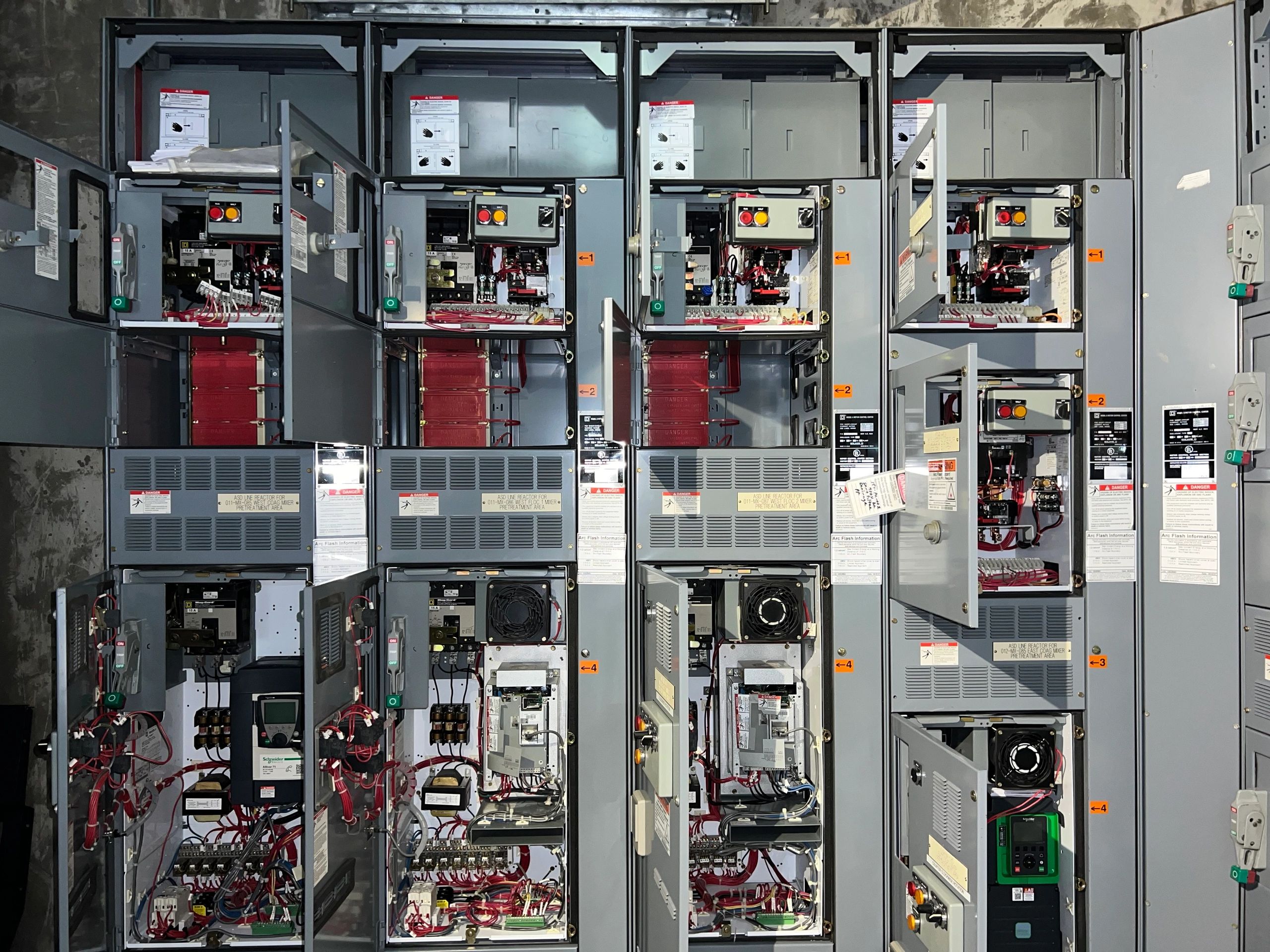
Switchgear lineup in an electrical room

FAQs

Answers to common questions

What’s the difference between acceptance and maintenance testing?

Acceptance testing verifies new or modified equipment before it is energized, per ANSI/NETA ATS. Maintenance testing, per ANSI/NETA MTS, evaluates in-service equipment at planned intervals to track condition and catch deterioration. Both produce documented results you can compare over the life of the gear.

How often should circuit breakers be tested?

Intervals depend on equipment condition, criticality, and operating environment. NFPA 70B and ANSI/NETA MTS provide the framework for setting them. Breakers that operate frequently, have interrupted faults, or show degrading trends typically warrant shorter intervals.

Do you test the trip circuit, or only the breaker?

Both. A breaker that times correctly in the test position still has to trip when the relay operates. We verify trip and close coils, auxiliary contacts, and interlocks, then confirm the full path with functional trip checks from the protective relay.

Can you apply and verify our breaker trip unit settings?

Yes. Settings are applied and verified per the values issued by the engineer of record or client. Trip units are tested by primary injection against those settings, with as-found and as-left values recorded in the report.

What’s the difference between acceptance and maintenance testing?

Acceptance testing verifies new or modified equipment before it is energized, per ANSI/NETA ATS. Maintenance testing, per ANSI/NETA MTS, evaluates in-service equipment at planned intervals to track condition and catch deterioration. Both produce documented results you can compare over the life of the gear.

How often should circuit breakers be tested?

Intervals depend on equipment condition, criticality, and operating environment. NFPA 70B and ANSI/NETA MTS provide the framework for setting them. Breakers that operate frequently, have interrupted faults, or show degrading trends typically warrant shorter intervals.

Do you test the trip circuit, or only the breaker?

Both. A breaker that times correctly in the test position still has to trip when the relay operates. We verify trip and close coils, auxiliary contacts, and interlocks, then confirm the full path with functional trip checks from the protective relay.

Can you apply and verify our breaker trip unit settings?

Yes. Settings are applied and verified per the values issued by the engineer of record or client. Trip units are tested by primary injection against those settings, with as-found and as-left values recorded in the report.

Request a Quote

Schedule testing, commissioning, or emergency field support.

Share your scope and schedule — a field service technician is dispatched on request. Call (321) 550-1192 or email nelson@neweratesting.com. Hours 7:00 am – 7:00 pm.

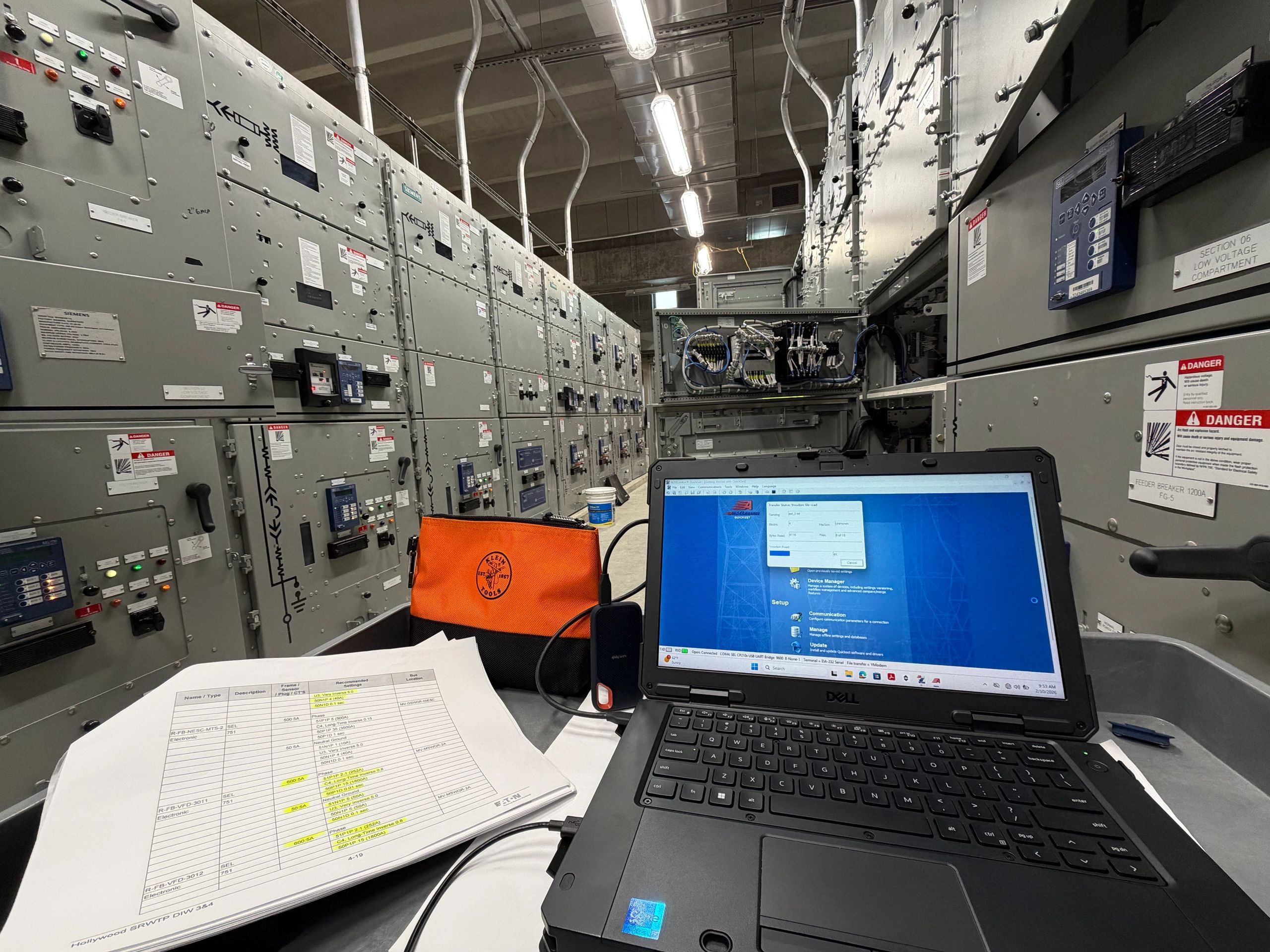
Switchgear lineup with protective relays and control devices

Request a Quote

Schedule testing, commissioning, or emergency field support.

Share your scope and schedule — a field service technician is dispatched on request. Call (321) 550-1192 or email nelson@neweratesting.com. Hours 7:00 am – 7:00 pm.

Switchgear lineup with protective relays and control devices

Request a Quote

Schedule testing, commissioning, or emergency field support.

Share your scope and schedule — a field service technician is dispatched on request. Call (321) 550-1192 or email nelson@neweratesting.com. Hours 7:00 am – 7:00 pm.

Switchgear lineup with protective relays and control devices

Create a free website with Framer, the website builder loved by startups, designers and agencies.